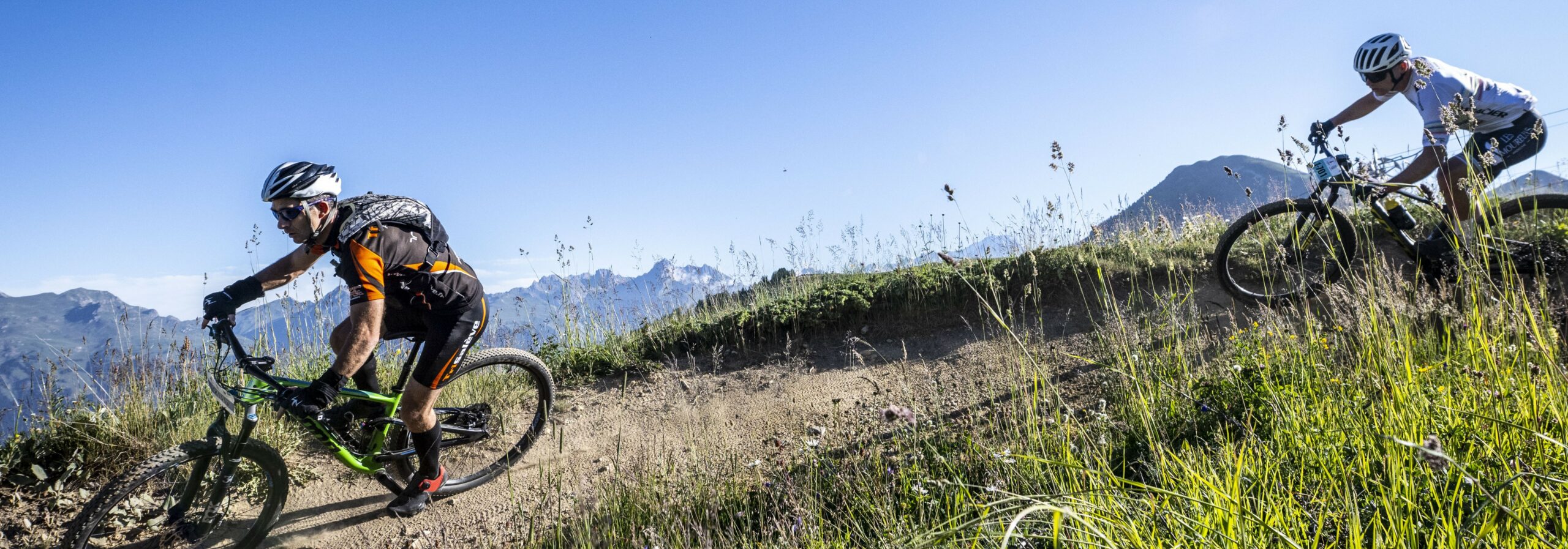


DOUBLE8 – XC MTB & E-MTB
71 km | 3 441 m elevation gain | 4 loops | 2 days
🚴XC MTB & E-MTB ⏱️ Timed
Date Saturday 11 & Sunday 12 July 2026
Times Sat. 11/07 – 10:00 a.m. for e-MTBs / 10:15 a.m. for MTBs
Sun. 12/07 – 9:00 a.m. for e-MTBs / 9:15 a.m. for MTBs
Location Plagne Centre
Price From €55
Age Over 18
For e-MTBs 1 battery required
Double8 - XC / E 71 KM
 The Double8: a ranked and timed XC mountain bike & e-MTB event
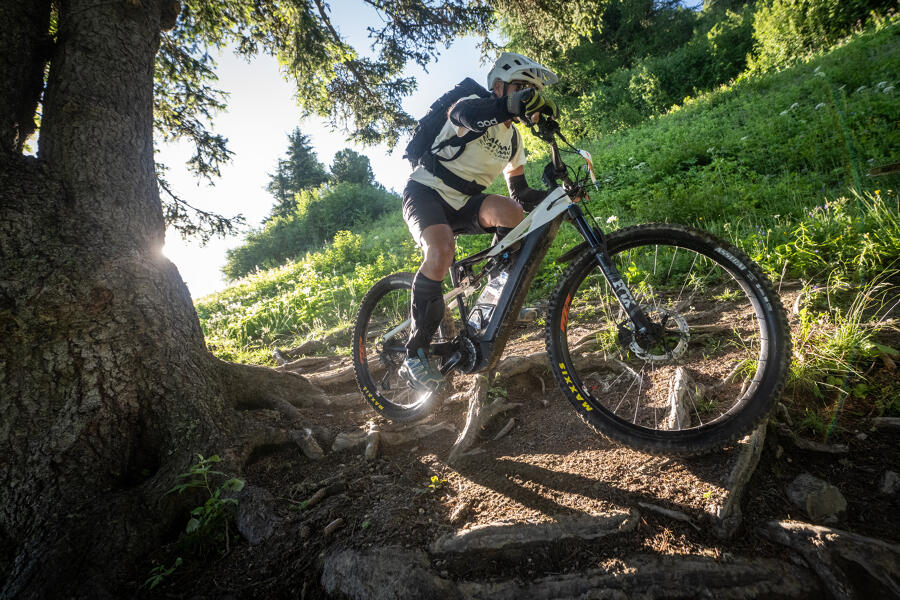
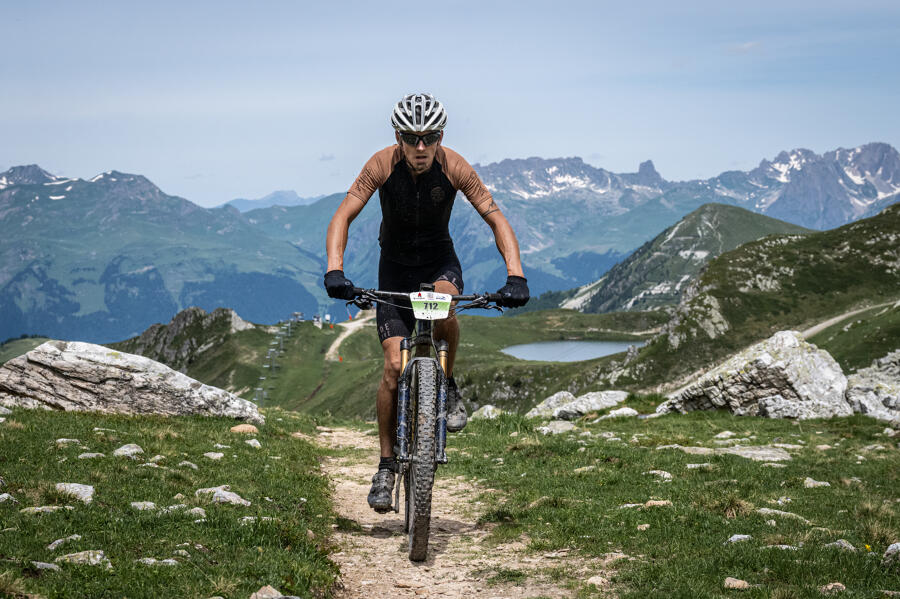
Open to XC mountain bikes and e-MTBs, the event consists of four loops of varying difficulty, covering a total distance of 71 km and 3,441 metres of elevation gain over two days. It is ideal for amateurs as well as long-distance enthusiasts. This year, the event will take place on Saturday 11 and Sunday 12 July 2026.
Shaped like a double ‘8’ or four-leaf clover, there are four loops of varying difficulty, with the first “8” on Saturday and the second ‘8’ on Sunday.
The race is available in two versions: XC MTB & E-MTB
Each race is available in individual format. Both formats take place together over the two days of the second weekend in July in our beautiful Alpine landscapes.
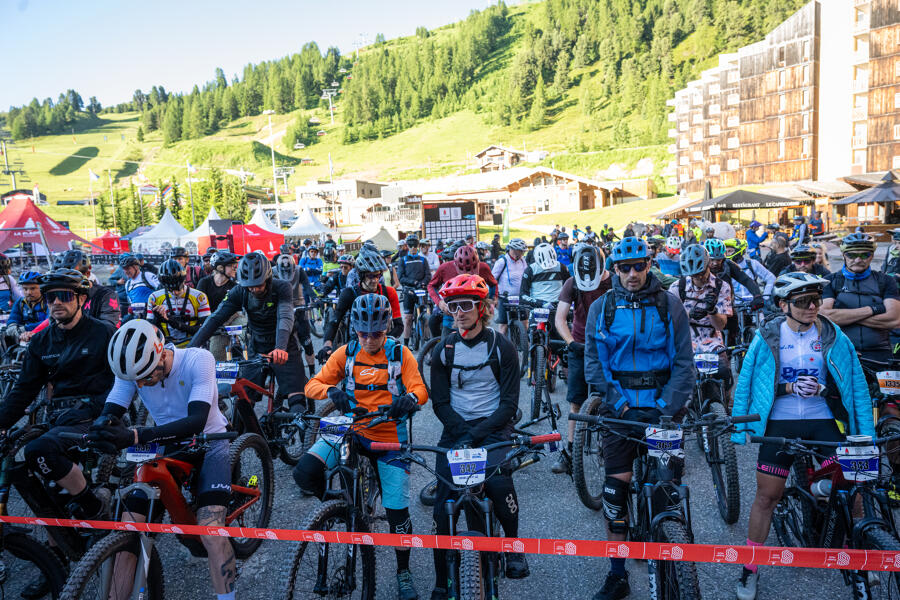
The base camp for starts and finishes will be set up in Plagne Centre. Participants will set off on the first loops on Saturday morning and can prolong the fun by tackling the following loops on Sunday, all of which offer different points of interest with varied landscapes between forests and high mountains.
A total of four loops completed in the following order:
 Loop 1 – Plagne Montalbert sector
Discover the legendary landscapes of Plagne Montalbert: single track in the forest, passage through the Bief Bovet trail and a return via the Lac Vert.
- Loop 2 – Roche de Mio sector
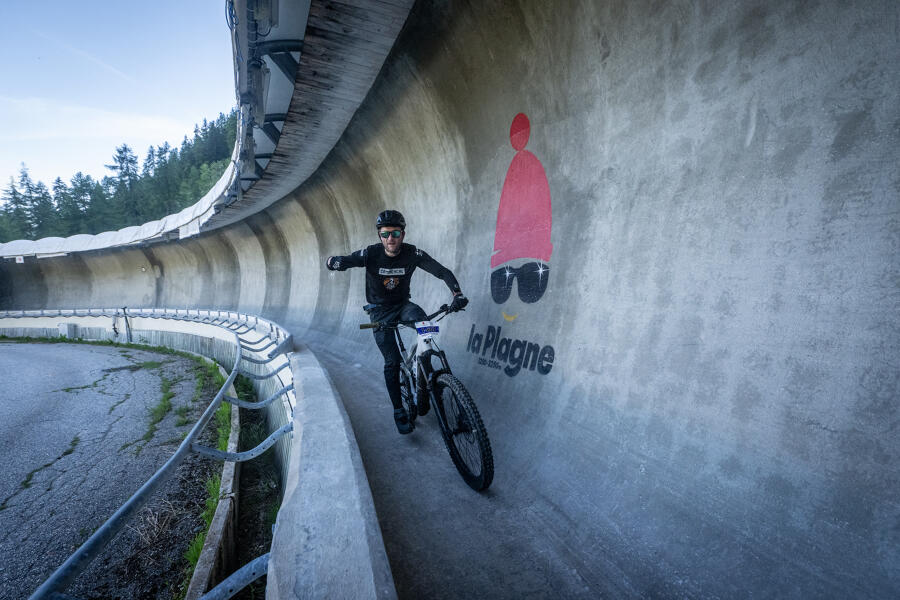
An iconic summit of the resort, passing by the Lac des Blanchet and returning via the La Plagne Bike Park.
- Loop 3 – Champagny en Vanoise area
A well-known loop on the Double8, set off to explore the heights of Champagny. - Loop 4 – Montchavin area
One last loop towards the paths and forests of Montchavin-les-Coches, passing through Cavard and returning to the outskirts of Les Frasses. Enjoy your last moments on the trails of La Plagne before reaching the finish line at Plagne Centre.
Participants who complete all 4 loops, covering a total of 71km and 3,441m of elevation gain, will be considered finishers!
Practical Information
Base Camp: Plagne Centre
Distance and elevation gain:
↔️ 71 km  3 441 m
- Loop 1 [Day 1] – Plagne Montalbert Sector – ↔️ 19.3 km 938 m
- Loop 2 [Day 1] – Roche de Mio Sector – ↔️ 15.7 km 801m
- Loop 3 [Day 2] – Champagny en Vanoise Sector – ↔️ 20.7 km 1 041 m
- Loop 4 [Day 2] – Montchavin Sector – ↔️ 15.8 km 661m
Number of bibs available: 200 individual e-MTBs / 200 individual mountain bikes
Bib collection:
Friday 10 July 2026 📍 Plagne Centre Salle Omnisport 🕐 2:00 p.m. – 8:00 p.m.
Saturday 11 July 2026 📍 Plagne Centre Salle Omnisport 🕐 7:00 a.m. – 9:00 a.m.
This race is open to individual mountain bikes and e-MTBs.
Plagne Centre - Base Camp
The Plagne Centre base camp is where it all happens!
The start and finish lines for both days, as well as the passages between each loop, are located here. Refreshment stations to recharge your batteries, repair stands and a supporters’ area are also available at this location.
Race Profiles
↔️ 71 km 3 441 m
- Loop 1 [DAY 1] – Plagne Montalbert Sector – ↔️ 19.3 km 938 m
- Loop 2 [DAY 1] – Roche de Mio Sector – ↔️ 15.7 km 801m
- Loop 3 [DAY 2] – Champagny en Vanoise Sector – ↔️ 20.7 km 1 041 m
- Loop 4 [DAY 2] – Montchavin Sector – ↔️ 15.8 km 661m

Find the profile of the race and each race on Trace de Trail
Time Barriers
Time barriers are set as a safety measure to limit excessively long journey times that could pose a danger to riders, particularly in the event of a change in weather conditions at altitude.
Mountain bike format
Time limit for the start of Loop 2 (Saturday 11 July): 3.15 pm
Time limit for the start of Loop 4 (Sunday 12 July): 1.15 pm
E-bike format
Time limit for the start of Loop 2 (Saturday 11 July): 12.30 pm
Time limit for the start of Loop 4 (Sunday 12 July): 11.30 am
The Double8 time limits only apply to the departure times for loops 2 on day 1 and 4 on day 2. When a competitor completes a loop, they must take into account the time needed to take a break at the refreshment station before setting off on the next loop. If the time limit is exceeded, the competitor will be denied access to the start of the loop in question and must hand in their timing chip to the organiser, who will record the end of their race.
Required and Recommended Materials
 Required Equipment
- 1 battery for e-MTBs
- Approved classic or full-face helmet
- Gloves
- Mobile phone, charged and switched on, so you can call for help
- Repair kit
- Survival blanket
- Windbreaker
- Whistle
E-MTB Specifications
Competitors taking part in the Double8 on e-MTBs must ensure that their bikes comply with the following rules:
- 250 W motor
- Electric assistance only when pedalling
- Assistance limited to 25 km/h (+/- 5%)
- Battery extenders or range extenders are prohibited.
 Recommended equipment
- Minimum water (0.5L)
- Food supplies (energy bars or dried fruit, etc.)
- Knee pads
- First aid kit
- Glasses
Each competitor must bring a reusable folding cup, as there are no disposable cups at the refreshment stations in order to limit waste.
General Organisation
General services
- First aid on the course
- Timekeeping
- Prize giving
 Loop 1 Services
- First aid
- Checkpoint
- Water station
 Loop 2 Services
- First aid
- Checkpoint
- Water station
Loop 3 services
- First aid
- Checkpoint
- Water station
Loop 4 services
- First aid
- Checkpoint
- Water station
Base camp services
- Repair stand
- 1 Refuelling station
- Supporters’ area
Battery Management
To take part in the Double8 E-MTB, only one battery is permitted. (Two batteries are prohibited)
All E-MTB competitors with a battery capacity of 630 Wh or less must take the race profiles into account based on their own effort.
The races are divided into two categories:
- Ranking for competitors who have ridden with a battery capacity of 630 Wh or less
- Ranking for competitors who have ridden with a battery capacity of more than 630 Wh
Charging the battery between Day 1 and Day 2 is the participant’s responsibility.
Participants must arrive at the start line with a fully charged battery. It is forbidden to ride with a battery in a rucksack. Furthermore, battery extenders or range extenders are prohibited.
Upon registration, entrants must declare their battery capacity, which will be verified when collecting race numbers.
The battery and bike are labelled with the participant’s race number at the time of collection to prevent any cheating or errors. If a competitor swaps batteries or rides with an unlabelled battery, this may result in disqualification.
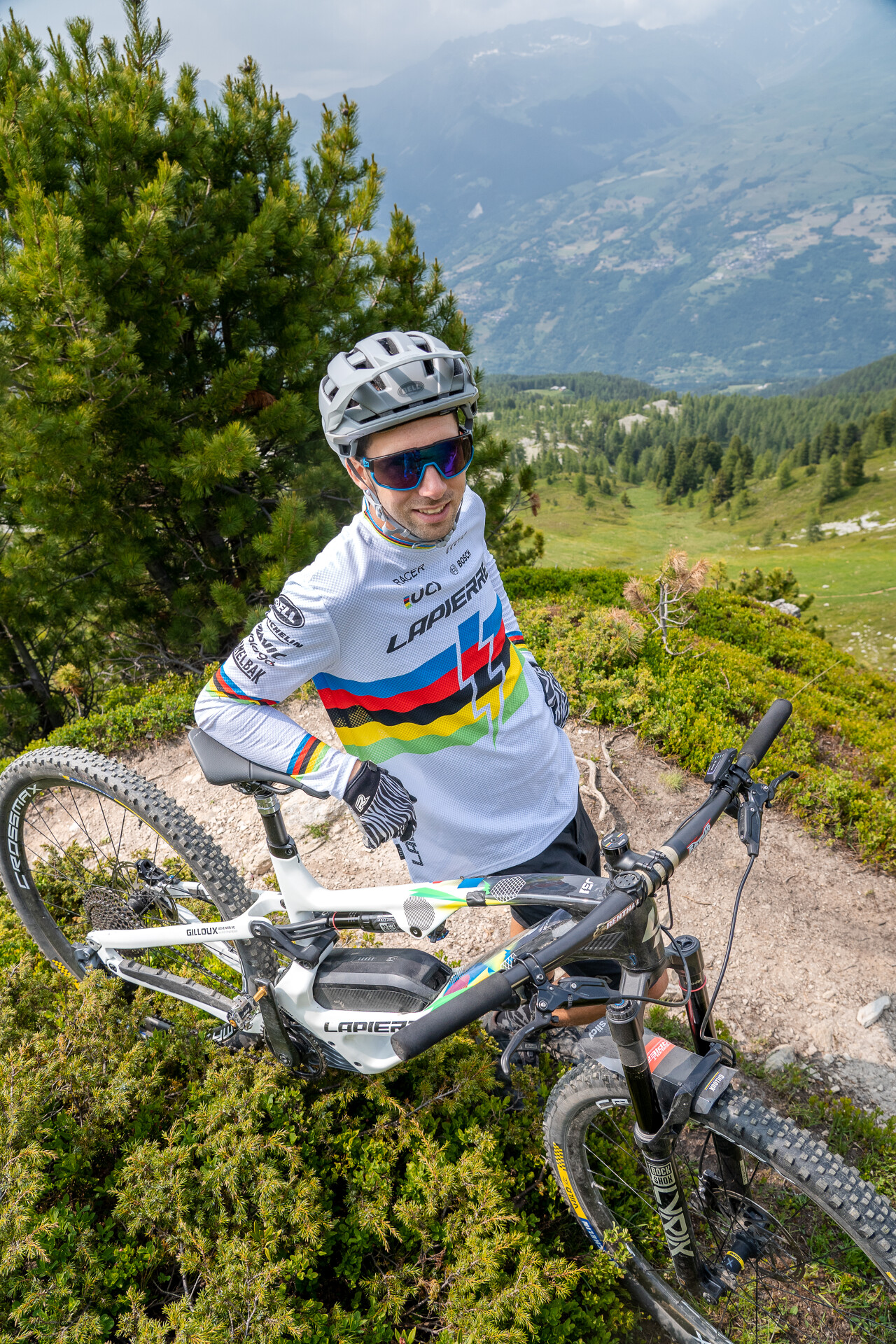
TESTED AND APPROVED BY JÉRÔME GILLOUX – SUPER8 AMBASSADOR